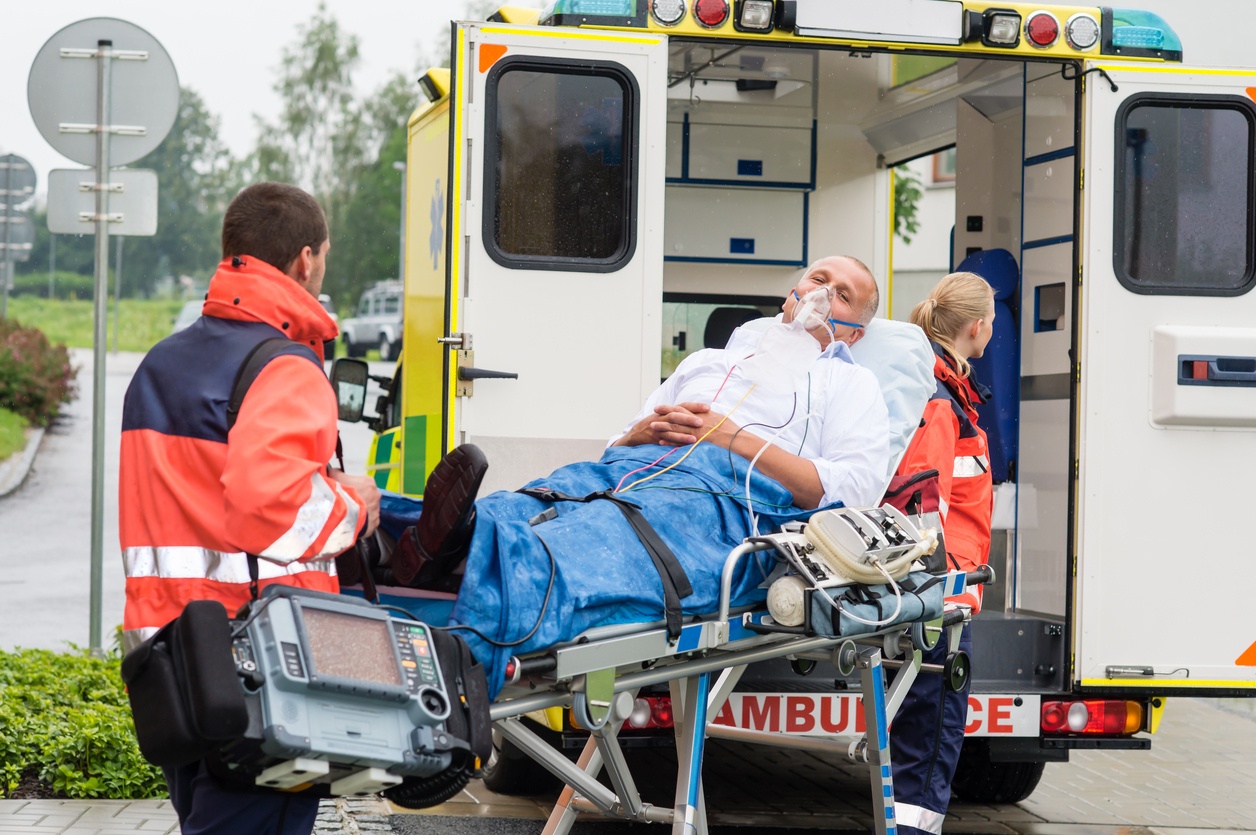
Airway management in healthcare is defined as procedures or use of devices that ensure an open pathway for air exchange between a patient’s lungs and the atmosphere. In the simplest of terms, whatever a healthcare provider needs to do to make sure his or her patient is breathing effectively or receiving enough oxygen to preserve life should be done ...

Realistic formative and summative scenarios are how we in EMS education fulfill the mantra, “Train like we fight.” Formative scenarios reinforce the learning process with perfect practice by providing frequent and accurate feedback to ensure automatic delivery of the skills (NREMT, 2015). Summative scenarios are used to evaluate a student’s ability to ...

Every year, about 735,000 Americans have a heart attack, with about 525,000 of those being a first heart attack. More alarmingly, 210,000 heart attacks annually happen in a person who has already suffered a previous heart attack.

The face of healthcare changes continually. New technology, advancements, and clinical processes all support the goals of creating a better patient experience, improving patients’ health, and promoting lifestyle habits that sustain good health and/or help maintain a chronic condition.

Once the tool of assassins and murderers, cyanide is now a highly regulated drug. However, while cyanide is hard to obtain for any type of political intrigue or anonymous poisoning (think of the still-unsolved 1983 Tylenol murders in Chicago), it is a toxic by-product of burning building materials. As such, EMS professionals and other first responders ...